


12 Benefits of Exposing Your Children to the Arts
As school classrooms become more focused on math, science, reading and writing excellence, our children may be missing out on some of the most important skills they can learn—appreciation of and active participation in the arts.
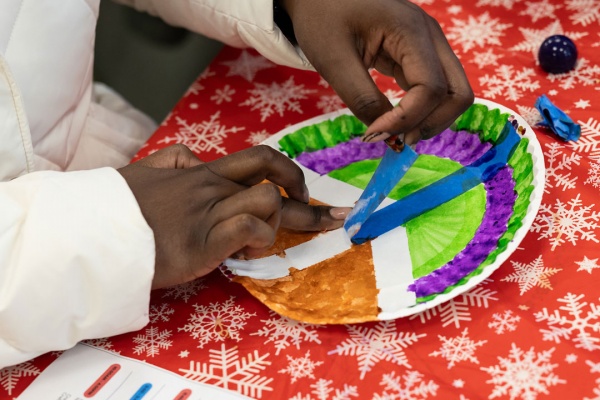
Fine arts can include much more than drawing and painting. They include music and drama. They encompass many kinds of artistic expression such as working with clay, creating mosaics, three dimensional paper creations, puppetry and making mobiles. They include photography, cooking, flower arrangement—any activity in which self-expression bursts forth.
Children naturally love to engage in art projects. The creative process is motivating in itself—an invitation to create something unique. There isn’t just one answer in artistic endeavors, rather there are infinite possibilities. And that’s good for children.
Child development specialists tell us that the left hemisphere of the brain is used in logical thinking and analytical processes—basically our math, reading and science lessons. The right hemisphere of the brain is used in our emotional, intuitive and creative activities—artistic types of activities. Ideally our children need to develop both sides of the brain and the sides must work together for optimal learning success.
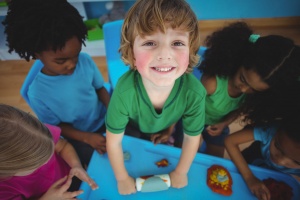
It’s not only beneficial to expose our children to the fine arts, it’s fun. And you might be surprised at the learning that takes place while a child paints or molds playdough or plays the part of Peter Rabbit in a simple play.
Here are 12 benefits of engaging in artistic projects:
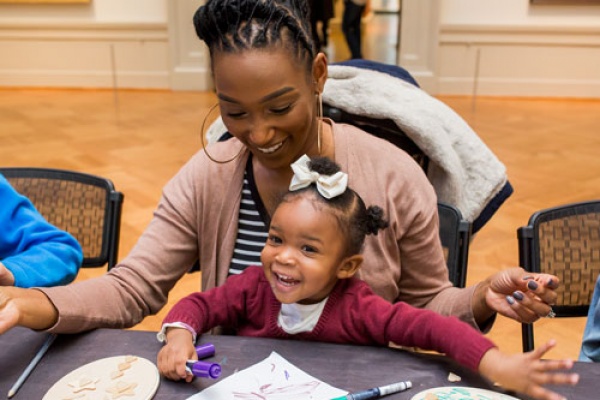
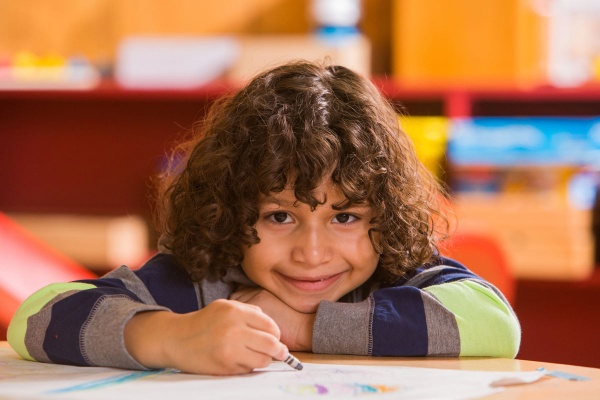
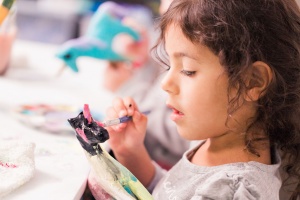
- Children will improve their fine motor skills. Handling paintbrushes, drawing with a pencil, cutting safely with scissors, all these require precision. Correct placement of fingers on piano keys, learning to play a scale, and strumming a guitar all build motor skills.
- Language skills are enhanced. Children learn a whole new vocabulary when they enter the world of the arts. They learn names of famous painters, color and shape words, they learn to describe the items in their drawing and identify various artistic processes such as shading, adding focal points and concepts such as perspective.
- Visual-spatial skills are developed. Children learn how to place items on a piece of paper, how to connect pieces of a three dimensional work, and how to move their clay into the shape they desire.
- In art appreciation, children will learn about the vast diversity found in artistic expression around the world. They’ll build cultural awareness as they compare African masks with those created by Alaskan natives.
- Decision making will develop. In creating any piece of art, there is a series of decisions made. What color, what shape, how big or small? Should I use watercolor or tempera? Art lends itself to experimentation that can spill over into creativity in other areas of life.
- Children who sing, act or create art learn to express their feelings either with or without words. They learn to express themselves in many different ways.
- Children who might tend to be shy or fearful develop confidence when taking part in the arts. Singing with a group, reciting a poem with classmates, taking a chance on the bright purple paint all work together to build confidence in the decisions they make.
- Because there is not just one way to create, children in the arts learn to embrace multiple points of view. If ten children draw the same apple, there will be ten different apples. And that’s okay.
- Art helps children learn to observe, describe, analyze and interpret. These critical thinking skills will be necessary in academic subjects such as math, science and writing.
- Children in the arts will learn to reflect on a project and see ways to improve or change. They will envision how they might say a line or how they might project their voice in the next performance. They’ll brainstorm ways to sculpt the clay so it looks more like a giraffe the next time.
- Children learn collaboration. Working in a singing group, acting a part in a play or working on a class mural are all projects that require communication, shared goals and working side by side to achieve those goals.
- Children who participate regularly in the arts have been found to achieve better grades and win more awards than those children who don’t have that luxury. (As reported in a ten year study by Shirley Heath of Stanford University.)
Providing experiences for your children in the fine arts can be as simple as supplying an art corner in your family room. It can be singing songs together or reading poetry aloud. You can make homemade playdough or use old socks to make puppets. It doesn’t have to cost money or take a lot of time.
You may also choose to enroll your children in music lessons, art lessons or drama classes. You may take them to local art museums and introduce them to folk art, sculpture or oil paintings. Whatever efforts you make to expose your children to the arts will pay off in their motivation, expertise and joy in creative learning.
So get artsy with it and watch your children bloom.
Related:
Visual & Hands-On Arts Opportunities for Kids
Music, Dance & Performing Arts
Share This Story
Jan Pierce, MEd, is a retired teacher and freelance writer who specializes in parenting, education and family life. She is the author of Homegrown Readers: Simple Ways to Help Your Child Learn to Read.