







Back-to-School Physicals
With the start of school just a few weeks away, it’s the season for students to get physicals. My kids think of these visits 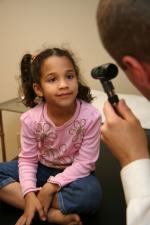 as a time to get poked and prodded, and they’re not big fans. But I’ve found that the Q&A with our pediatrician is invaluable.
Many families schedule these exams with their own family doctors, but there’s also the option of going to an urgent-care clinic for physicals. And once you have the appointment, you should think about just what you want the doctor to check for. Like, say, cholesterol.
Really? For elementary kids?
To help with these decisions, I turned to two doctors affiliated with the SSM Medical Group. First, Dr. Jennifer Krick, a pediatrician at SSM Medical Group-Maryville Pediatrics in Maryville, Ill., e-mailed with answers to my questions about scheduling the exam.
Q: Should parents try to schedule their children's physicals with their pediatricians?
Dr. Krick: Yes, parents should always schedule their children’s physicals with their pediatrician or family doctor. She is the physician that is most familiar with your child’s previous medical history. This is a great opportunity to discuss any medical conditions that your child has, such as asthma or seasonal allergies, and adjustments can be made to any medications she is taking for these conditions. In addition, if anything is discovered during the physical that needs to be followed, such as an elevated blood pressure reading, injury, or heart murmur, only your child’s physician can adequately follow up on any further exams or tests that need to be done.
Q: If a child gets a physical at a clinic, what happens to follow-up care if a “red flag” shows up?
Dr. Krick: If a “red flag” shows up during a physical at a clinic, your child will likely be referred back to his physician for follow up. This will mean a second visit to his doctor. In addition, a record of your child’s visit is usually not sent to the primary physician, so she will be unaware that a problem was detected during the visit. Therefore, any labs or tests that were ordered at the visit will not be followed by your child’s doctor.
Q: What kinds of tests should be done at every back-to-school exam?
Dr. Krick: Every back-to-school exam should include height, weight, BMI (body mass index) calculation and blood pressure screening. In addition, preschoolers and kindergarteners should have developmental and lead risk assessments done. These can easily be done by answering a series of questions. In addition, hearing and vision assessments should be done at certain ages, and many pediatricians’ offices are equipped for these.
Q: What are the differences between sports physicals and regular school physicals?
Dr. Krick: A sports physical and regular school physical have many of the same elements. However, a sports physical should optimally be done at least six weeks before the start of the sports season. This will allow enough time to address any injury or abnormality that may be found on exam before the start of the season. In addition, during a sports physical certain elements should be addressed including current injuries, heart risk, and history of concussion.
Dr. Elizabeth Babusis, a physician in the Pediatric Lipid Disorders Clinic at SSM Cardinal Glennon Children's Medical Center, tackled the more surprising issue of cholesterol screenings as part of routine back-to-school physicals. She also responded via e-mail.
Q: As far as the cholesterol test, do you recommend that all children receive one? Why or why not?
Dr. Babusis: Yes, I do. Elevated cholesterol is positively linked to early heart disease and other vascular diseases, and can significantly shorten a person’s life. You can't look in the mirror and see how your cholesterol looks today - the only way to detect it is with a blood test.
Q: Many medical experts, including the American Heart Association, disagree with universal testing, favoring instead screenings based on family history, obesity or other risk factors. What is your opinion?
Dr. Babusis: I believe that universal screening will yield the best results, as was demonstrated in a recent study. They found that by using standard family history questions to target the children most likely to have a lipid disorder, they would miss a significant number of children who indeed tested to have a dyslipidemia, some who would even be recommended to receive medication. Many people are not fully aware of their own family medical history, which could help account for some of these missed dyslipidemias. Also, some children would simply be the first in their families to be affected.
Q: Let's say a child's cholesterol is high. What would be the typical course of action?
Dr. Babusis: If a child tests high for her cholesterol we would start therapy with lifestyle modifications: improving diet and exercise on a daily basis. It is standard to allow six to 12 months for full affect before starting on medications. There are still some disagreements about the full benefit and long-term risk of medications in this age group, but it is still widely accepted that starting therapy for those with significantly high cholesterol is beneficial in slowing the process of atherosclerosis and delaying the onset of events such as heart attacks and strokes.
Q: My pediatrician is pretty conservative when it comes to helping parents like me filter big-news studies and recommendations. There's a risk parents will have a poor-quality cholesterol test done, overreact to the positive result, and put their child on an inappropriate diet without medical consultation. How would you respond to that possibility?
Dr. Babusis: As long as people are not overly restrictive with diets or overly zealous with exercise, the changes we talk about are beneficial to everyone's health regardless of cholesterol levels. They involve eating a balanced diet, not over-consuming calories or fats, especially trans fats, and engaging in moderate level exercise for at least one hour five days weekly. That being said, one should never try to interpret lab results without the guidance of their doctor. Remember that pediatric lab results are not viewed with the same "normals" as adult labs. If you are ever worried about numbers you don't understand, don't hesitate to call your doctor.
By Amy De La Hunt, Health Blogger for SmartParenting
Share This Story

Amy De La Hunt is a journalist and editor who lives in the St. Louis metro area and works across the country as a writer, copy editor, project manager and editorial consultant on everything from fiction books to monthly magazines to blog posts. When she's not chauffeuring her teenage sons to activities, Amy is an enthusiastic amateur cook, landscaper, Latin dancer and traveler. Follow Amy on Instagram @amy_in_words