






A Healthy Holiday Season Despite Asthma
There are lots of reasons to grumble about the weather lately, but for those with asthma, this wintry weather is especially aggravating.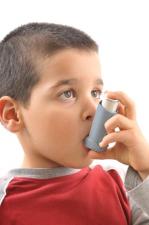 Their airways went from 70-degree days to wind chills below zero in just a few weeks. Add that to the usual holiday asthma triggers — dust mites on decorations pulled from storage, mold spores on live trees, fragrances in potpourris and candles — not to mention the usual wintertime upper respiratory infections going around, and it’s no wonder Dr. Susan Berdy’s phone is ringing off the hook.
Berdy is a physician at Allergy Consultants in St. Louis and an assistant professor of clinical medicine at the Washington University School of Medicine. She said cold air can be a trigger for asthma — and, because children’s airways are smaller, a trigger that might not cause major problems for an adult can be serious for kids.
To ensure that kids with asthma have a healthy holiday season, Berdy recommends that parents “meet with your doctor and have an asthma action plan in place so that when they do get sick, you know exactly what you can do early on to minimize how sick your child gets,” she said. For example, “at the first sign of a cold, you can start your rescue medication.” Parents should also make sure that they are compliant with their child’s daily maintenance medications. Children with asthma should have a yearly flu shot.
There are other things parents can do to be proactive too. On cold days when kids will be going outside at school recess, itmay help to pretreat with albuterol. “If cold air is a trigger,” she continued, “you may need to keep the child in.”
Because pets and kids tend to spend more time indoors in winter, parents should be aware that pet hair and dander are more prevalent asthma triggers this time of year that in warmer weather.
But perhaps most importantly, parents should be alert to signs that their child’s asthma is flaring up. “Some children can verbalize early on that their chest hurts or they don’t feel well,” Berdy said. “Others you have to watch their behavior and notice symptoms” especially coughing or wheezing. If a child who’s normally lively and energetic avoids physical activity, that could be an early sign that their asthma needs to be treated.
Berdy said giving rescue medications and following an asthma action plan may prevent a child from having to go to the doctor or emergency room for an asthma-related problem. However, parents should seek medical help if:
- The rescue medication doesn’t last a full four hours.
- The child avoids physical activities for an extended time.
- Fever is present.
- The child awakens at night with asthma symptoms needing medication.
During the time parents are giving their child medication every few hours during the night, it’s probably a good idea not to send them back to school, Berdy said. Kids sent back to school too early could be more vulnerable to those upper respiratory infections (which could also be an asthma trigger, perpetuating the cycle).
If this sounds like a lot to remember, you’re right. “The learning curve for a new diagnosis of asthma is about a year,” Berdy said.
“It’s very frustrating to have a young child with asthma,” she continued. “You feel totally out of control.” During that first year parents are learning to manage their child’s asthma in response to many different triggers: weather, infections, allergies, irritants. Each trigger can act alone or in combination. All these experiences will eventually yield an action plan that will make parents feel less helpless.
“That’s why the maintenance medications are so important,” Berdy said. “It makes you be in charge of the asthma, not the other way around.”
Berdy is optimistic about the success of medications in helping keep pediatric asthma under control. “The treatments are so much different than they used to be 20 years ago,” she said. “The medicines are better, the delivery systems are better, it’s all better.”
A diagnosis of asthma in St. Louis is certainly not uncommon — it’s one of the worst cities in the country for asthma and allergies – but the prognosis for a child who has a plan and sticks to it is good. “There are so many good treatments for it that it really can become less of a burden, especially as a child gets older,” Berdy said.
Editor’s note: Special thanks to the Asthma and Allergy Foundation’s St. Louis Chapter for putting us in touch with Dr. Susan Berdy for this piece. To learn more about the AAFA or its programs — including Project Concern, which provides comprehensive asthma services to uninsured or underinsured kids from birth to age 22 — visit aafastl.org.
By Amy De La Hunt, Health Blogger for SmartParenting
Share This Story

Amy De La Hunt is a journalist and editor who lives in the St. Louis metro area and works across the country as a writer, copy editor, project manager and editorial consultant on everything from fiction books to monthly magazines to blog posts. When she's not chauffeuring her teenage sons to activities, Amy is an enthusiastic amateur cook, landscaper, Latin dancer and traveler. Follow Amy on Instagram @amy_in_words