





Doing Our Part for the Good of Science
In the mail the other day I received a letter asking if I’d be willing to sign my son up to be poked and prodded for the good of science. 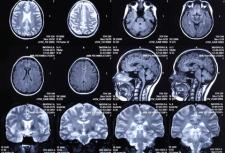 His clinic is participating in a study about asthma, and because he’s been treated for breathing problems a couple of times, they wanted to take a look at him.
He’ll get a free medical workup and I’ll have to answer a bunch of questions. But, because his clinic is in the control group, he won’t get any special treatment, drugs, or information. All we get (aside from a little stipend) is the feel-good knowledge that we have helped doctors learn a bit more about a medical problem that affects thousands of children around St. Louis.
If you have a baby younger than 6 months of age, you can do your own part for the good of science by signing up to be part of a control group in an autism study. Washington University is part of the Infant Sibling Study, a nation-wide look at babies who have an older sibling with an autism diagnosis as well as babies who have an older sibling who is typically developing.
The study’s local organizers are actively seeking children in that latter group, according to Beth Prusaczyk of the Washington University Medical Center.
She explained that the play-based study is non-invasive and flexible – parents can schedule their phone interviews and developmental tests when it’s convenient for them, including weekends.
The one test that may throw some parents off stride is the MRI. Prusaczyk said the magnetic resonance imaging (it takes a picture without the use of radiation) is done while the babies are asleep in the evening, when infants are so conked out that they don’t stir even in the vicinity of a big, loud machine. “I know it sounds crazy to imagine a 6-month-old sleeping through a loud MRI scan,” she said, “but we have had amazing success and I promise, it is possible!”
Scientifically, the study’s goals are to find clues about early changes in the brain that could be useful in diagnosing autism in very young children. “We know that there is a brain overgrowth that occurs in children with autism,” Prusaczyk said. “We believe it happens sometime in the first 2 years of life, although we aren’t sure exactly what part of the brain is affected.
“We won’t be able to tell if a child has autism from the MRI,” she continued, “but we are trying to learn more about what is happening in the brains of children who develop autism. We do know that siblings of children with autism are at a greater risk for developing autism themselves.”
In addition to a $125 stipend for visiting the Wash U. research facility when their baby is 6 months, 12 months and 24 months old, “the parents will receive results from this testing, and we will let them know if there are things that we feel their infant could use extra help with,” Prusaczyk said. “We won’t know much at 6 months, but we know a little more at 12 months and a lot more at 24 months.”
Over the 18 months their child is in the study, parents will be interviewed over the phone and in person at regular intervals. “These interviews ask a wide range of questions ranging from pregnancy history, family history, early development of the infant and his or her sibling(s) and many other things. While these interviews can be a bit time-consuming, we are very flexible and work extremely hard to accommodate the parent’s schedules,” Prusaczyk said.
To learn more about the study’s goals and the fascinating research angle it’s exploring, visit the Infant Brain Imaging Study’s national homepage.
If you are interested in participating, send Prusaczyk an e-mail or call 314-747-6729 (or toll free 888-845-6786). You will be interviewed over the phone to find out if your child is eligible to participate.
By Amy De La Hunt, Health Blogger for SmartParenting
Share This Story
Amy De La Hunt is a journalist and editor who lives in the St. Louis metro area and works across the country as a writer, copy editor, project manager and editorial consultant on everything from fiction books to monthly magazines to blog posts. When she's not chauffeuring her teenage sons to activities, Amy is an enthusiastic amateur cook, landscaper, Latin dancer and traveler. Follow Amy on Instagram @amy_in_words