



For Parents, New Insights Into the Teen Brain
 Most of us have looked back at our teenage selves and wished for a time warp to swallow a decade or so of awkwardness and insecurity. I can certainly think of some excruciating memories — and I was lucky to have had a close circle of equally nerdy girlfriends to buffer the worst of the social pressures.
Now my 9-year-old is zooming toward teen-dom at what feels like the speed of light, and I’ve been reflecting a lot about how to prepare him (and myself) for the ominous decade ahead.
Because I’m still a science geek all these years later — some things never change! — my curiosity has turned toward neuroscience. If I can just figure out what’s going on in his brain …
This hasn’t been as hard as I expected. Researchers love the teen brain. To my surprise, it’s not a car wreck — instead, think of it as a home entertainment system with all the parts in place except the wiring.
The guy doing the wiring shows up unpredictably between the ages of 12 and 25, hooking up the emotions and reactions first, then veeeery slooooowly getting around to the self-discipline, problem-solving, planning and impulse-control circuits. And the way he wires those is determined by what’s happening around the rest of the house. (For more details, see the National Institute of Mental Health’s excellent summary of teen brain development.)
That “rest of the house” is the good news for parents of teens (and preteens and tweens). It means that the skills our kids have learned don’t disappear. The more practice they have using them, the more likely those circuits will get wired earlier and better.
So what skills do they need? Researchers are looking at that too. For example, the Center for the Study of Social Policy recently introduced the YouthThrive Protective and Promotive Factors.
- Personal resilience
- Social connections
- Knowledge of their own development
- Concrete support in times of need
- Social, emotional, behavioral, intellectual, and moral competence
The list was developed for children in foster care, because teens with a history of distress and trauma are usually not viewed from a strengths-based perspective. But kids in foster care — like all kids — can be equipped with what they need to mitigate risk and develop successfully. The CSSP’s homepage uses those five factors as a starting point for a specific list of 35 points where adults can make a difference .
Here are two such adults with very different backgrounds and approaches: yoga teacher and artist Lindsey Scott and nonprofit founder, author, and former Navy SEAL Eric Greitens.
Lindsey Scott
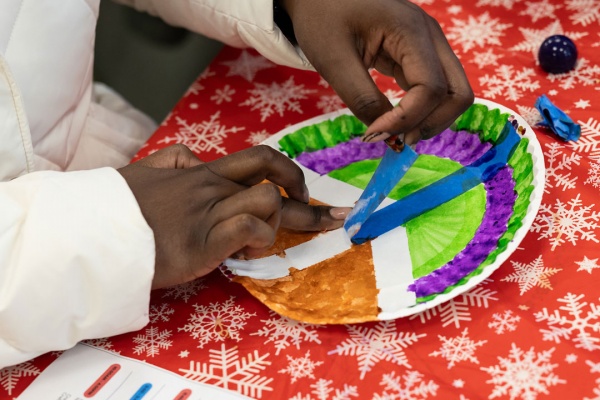
For the next four Saturdays, Oct. 20 to Nov. Nov. 10, Scott will be offering a GraceSpace art and yoga session. During each of the two-hour blocks, young women ages 13 to 18 will “explore using both our bodies and our minds to tell the true story of who we are,” Scott said via e-mail. One hour will be yoga; the other will be art. Participants will help plan the curriculum.
The new program grew out of Scott’s experiences over the summer at the Kripalu School of Yoga in Massachusetts, where she attended an intensive certification program. “In high school and college, I struggled so much with body image, standing in the mirror squeezing my thighs back so I could look like gap-legged models; starving, binging, exercising, self-hating,” Scott wrote, “dominating my body instead of feeling from inside it.
“Yoga has welcomed me home to gentleness, self-care, pleasure, and awareness of my own and everyone else's unique beauty,” she continued. “Practice has gifted me a toolkit to come home to the present moment, just as it is. I wish I would have found it in my teens, and I want to help make it accessible to young women.”
While she was a resident artist at the Community Arts and Media Project in South St. Louis, Scott started the first iteration of GraceSpace. “I had such sweet connections with neighborhood girls as we got to know each other and the elders of the group became 'play mamas' to the youngers,” she said. “For me, gathering in such a way puts its finger on the lost initiation rites of womanhood.”
But on the practical side, Scott knows what will attract teens: fun. “The physical vibrant creativity of the Magic Hat space totally invites colorful, expressive, collaboration … it would have been my teenage dream!” Scott said. “Teal walls, yarn bombs, a giant peace sign sculpture created by open books. Gorgeous and evocative.”
Eric Greitens
Role play and reflection are two tools educators often use with teens. Greitens’ new book, The Warrior’s Heart, incorporates them while using his own life story as a starting point for discussions about compassion, integrity, courage, perseverance and other traits.
That life story will certainly appeal to teens’ thrill-seeking side; Greitens has traveled the world, first as a humanitarian working in refugee camps, then as a Navy SEAL on military missions. His current job, as the head of a nonprofit called The Mission Continues that helps wounded soldiers find meaning in their lives by doing service projects, is inspirational as well.
The book and the accompanying materials for educators are tailored toward character education programs. Greitens worked with Youth Service America to come up with a planning guide for teens who want to follow in his footsteps with service projects of their own.
But the book is also intended to be thought-provoking when read on its own, providing a hopeful message to teens about what they can become. According to the press materials, teens will “be asked to consider the power of choice, of making the decision each and every day to act with courage and compassion so that they grow to be tomorrow’s heroes.”

By Amy De La Hunt, Health blogger for SmartParenting
Share This Story

Amy De La Hunt is a journalist and editor who lives in the St. Louis metro area and works across the country as a writer, copy editor, project manager and editorial consultant on everything from fiction books to monthly magazines to blog posts. When she's not chauffeuring her teenage sons to activities, Amy is an enthusiastic amateur cook, landscaper, Latin dancer and traveler. Follow Amy on Instagram @amy_in_words